
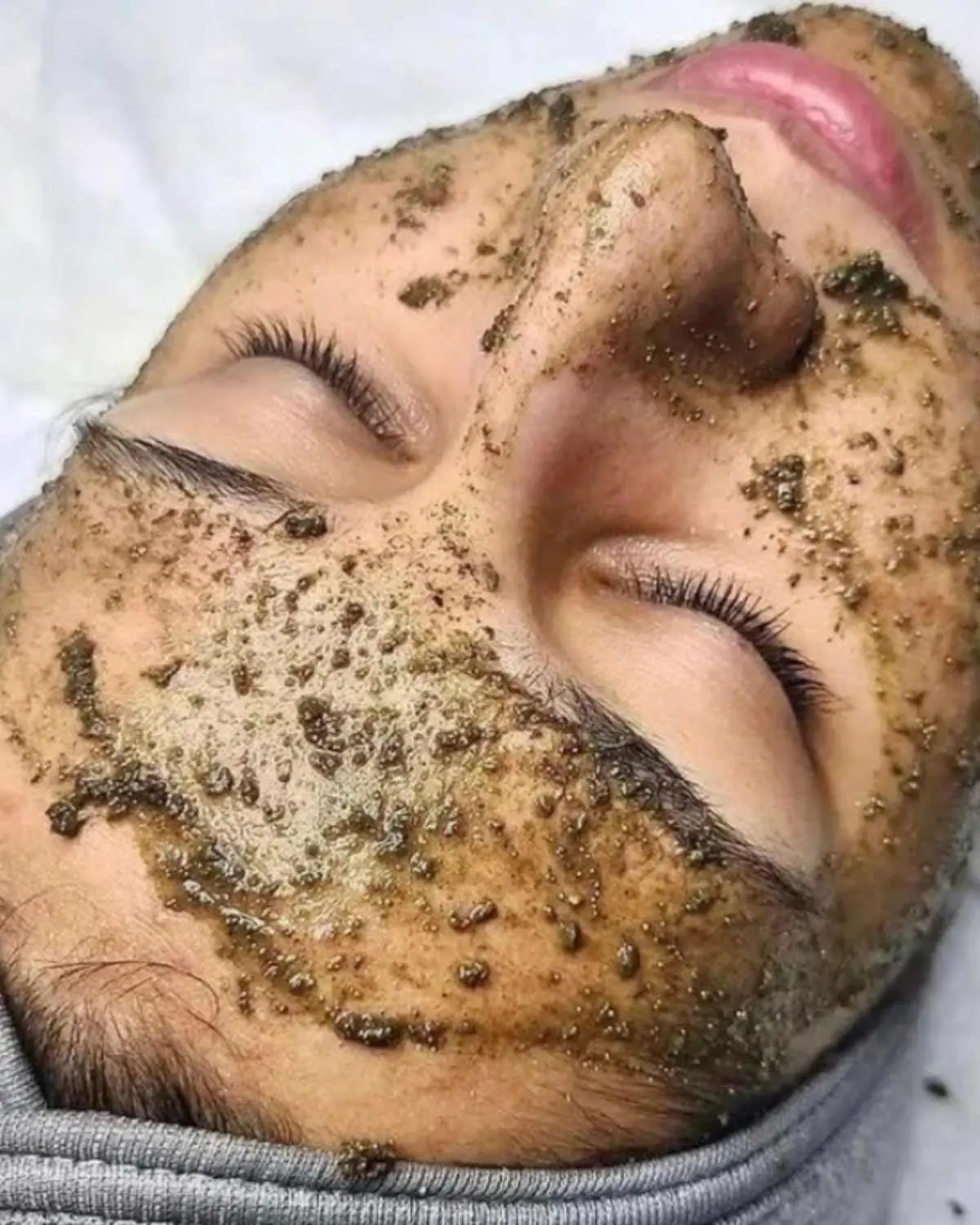
Quick response Facial exfoliation removes dead cells that accumulate on the outermost layer of the skin, improving texture, luminosity, and absorption of active ingredients. There are four types: physical, professional mechanical, chemical, and enzymatic. The right choice depends on your skin type, not on trends. During an assessment, I will determine which type (or combination) makes sense for you.
What are the different types of facial exfoliation?
All exfoliation has the same goal: to remove dead cells accumulated on the stratum corneum, but the method completely changes the intensity, the indication, and the risk of irritation. I distinguish four categories.
What is physical exfoliation and what skin types is it suitable for?
Physical exfoliation uses particles (biodegradable microbeads, fine flours, brushes or sponges). konjac) to remove dead cells through gentle mechanical friction. It's the most accessible method for home use and works well on normal to oily skin. On sensitive, acne-prone, or rosacea-affected skin, friction can worsen irritation—in that case, I prefer to recommend another method.
What does professional mechanical exfoliation (microdermabrasion and dermaplaning) consist of?
Professional mechanical exfoliation uses devices: a microdermabrasion It uses a tip with crystals or diamond to polish the surface layer, and the Dermaplaning i use a surgical blade to remove dead skin cells and vellus hair (that fine "mustache" hair that retains oil and makeup). These are salon techniques, not safely replicated at home, and I usually recommend them for uneven texture, enlarged pores, or as a preparation before other active ingredients, since the skin absorbs them better afterward. I perform Dermaplaning in my office in Alcabideche, always within an evaluated protocol — not as an isolated service.
How do AHA, BHA, and PHA acids work in chemical exfoliation?
Chemical exfoliation dissolves the bonds between dead cells using acids, without friction. alpha-hydroxy acid (AHA), glycolic and lactic acid are water-soluble and indicated for dry skin or skin showing signs of aging. beta-hydroxy acids (BHA), products like salicylic acid are oil-soluble and penetrate pores, so they work best on oily or acne-prone skin. polyhydroxy acids (PHA) They act in a more superficial and gentle way, making them the safest option for sensitive or reactive skin.
Why is enzymatic exfoliation considered the gentlest?
Enzymatic exfoliation uses proteolytic enzymes such as papain (extracted from papaya) or the bromelain (from pineapple), which digest the keratin of dead cells without friction or strong acid. It is the gentlest option of the four, with the lowest risk of irritation, which is why it is the one I use most on sensitive skin, with rosacea, couperose, or right after a more intense procedure.
How often should I exfoliate my facial skin?
There is no single frequency — it depends on skin type and the method chosen.
Oily or combination skin tolerates 1 to 2 exfoliations per week; dry or sensitive skin responds better to once every 10-15 days. Exfoliating every day, with any method, is not recommended, as it compromises the skin barrier.
How do I choose the right type of exfoliation for my skin?
I don't choose the type of exfoliation based on current trends; I choose based on the skin I have in front of me. In an assessment, I analyze phototype, thickness, sensitivity, and what the skin already tolerates, and only then do I decide if the protocol combines physical exfoliation at home with a professional step (mechanical, chemical, or enzymatic) in consultation. That's why I don't sell "exfoliation X" as a closed product; it's a component within the skincare plan I design for each person, usually starting from their... facial cleansing or within the protocol Lourdes Experience.
Comparison chart: the 4 types of facial exfoliation side by side
| Type | How does it work? | Best for | Recommended frequency |
|---|---|---|---|
| Physical | Gentle mechanical removal by friction (particles, brushes) | Normal to oily skin, for home use. | Up to once a week |
| Professional mechanics | This device removes the stratum corneum with greater control (microdermabrasion, dermaplaning). | Uneven texture, enlarged pores, vellus hair | Every 3-4 weeks, in the office. |
| Chemistry (AHA/BHA/PHA) | Acids dissolve the bonds between dead cells. | AHA: dry/mature · BHA: oily/acne-prone · PHA: sensitive | 1-2 times/week at home; every 2-4 weeks with a professional peel. |
| Enzymatic | Enzymes (papain, bromelain) digest keratin without acid or friction. | Sensitive skin, reactive skin, rosacea, post-procedure. | 1-2x/semana |
When should I avoid exfoliating on my own and seek professional advice?
There are signs that call for a pause and evaluation, not further exfoliation: active rosacea or couperose, inflamed acne, compromised skin barrier (burning, persistent redness, peeling), or recent use of isotretinoin. In these cases, self-exfoliation can worsen the situation. I work with atopic, oncological, psoriasis, rosacea, and couperose skin in my office in Alcabideche—in these profiles, clinical criteria define if and how exfoliation is included in the treatment plan.
Frequently asked questions about facial exfoliation.
Exfoliation or exfoliation: which is the correct spelling in Portuguese?
Both forms exist in Portuguese dictionaries, but "esfoliação" is the currently recommended spelling, while "exfoliação" is the form closer to the Latin origin and less commonly used.
Can I exfoliate my skin every day?
No. The general recommendation is not to exceed 1 to 2 times per week, even with gentle methods. Exfoliating daily compromises the skin barrier and can cause sensitivity, redness, and increased oiliness.
What is the difference between chemical and enzymatic exfoliation?
Chemical detoxification uses acids (AHA, BHA, PHA) that dissolve the bonds between dead skin cells; enzymatic detoxification uses enzymes like papain or bromelain, which digest them without acid. Enzymatic detoxification is usually gentler and is the one I prefer for sensitive or reactive skin.
Do microdermabrasion and dermaplaning have the same effect?
No. Both are professional mechanical exfoliation methods, but microdermabrasion polishes the surface with crystals or a diamond tip, while dermaplaning uses a blade to remove dead skin cells and vellus hair. I choose one or the other—or combine several steps—depending on the goal of the session.
Is exfoliation suitable for all ages?
Yes, but the method changes. On younger skin (20-30 years old), I use exfoliation for prevention and to even out skin texture; from age 40 onwards, I combine it with active ingredients that stimulate cell renewal within a broader anti-aging protocol.
If you want to understand which type of exfoliation — or combination — makes sense for your skin, the first step is an assessment, which is free if you book an appointment on the same day.
Schedule a free evaluation