
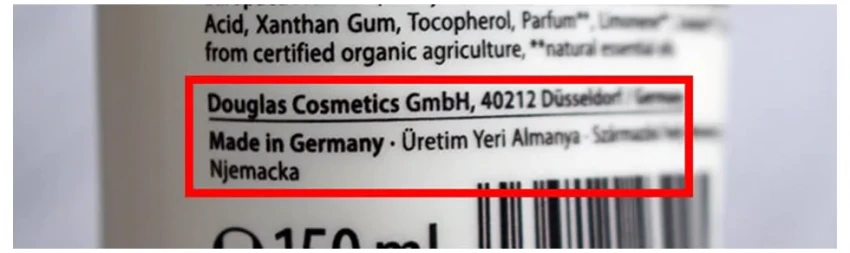
INCI lists the ingredients of a cosmetic in descending order of concentration, with scientific names standardized in the EU. The first five indicate the base of the formula; the active ingredients (retinol, niacinamide) appear below. Check for fragrances, preservatives, and consult CosIng to confirm the safety of any ingredient.
In advanced aesthetics, beauty and health go hand in hand. One of the most valuable pieces of knowledge for anyone who cares for the skin—whether professional or client—is understanding what is truly contained in a cosmetic product. INCH (International Nomenclature of Cosmetic Ingredients) is the key to a safe and effective choice. This guide teaches you how to read a label like a true expert.
What is INCI and why is it mandatory?
THE INCH (International Nomenclature of Cosmetic IngredientsThe Transparency Index (TII) is a standardized system used in the European Union and several other countries. Its function is to guarantee transparency and security for the consumer, regardless of the language of the country where the product is sold.
All cosmetics sold in Portugal must display:
- List of ingredients by their scientific name (Latin or technical English)
- Decreasing order of concentration
- Lot number, PAO (period after opening), function, and manufacturer.
There is one exception to keep in mind: ingredients with a concentration of less than 1% can appear in any order from that point in the list, such as colorings (identified by the abbreviation). THERE followed by a number), according to Regulation (EC) No 1223/2009 on cosmetic products.
According to the book Cosmetology for Aesthetics and Beauty According to Sabater and Mourelle, these elements are an essential part of the regulations for safe commercialization.
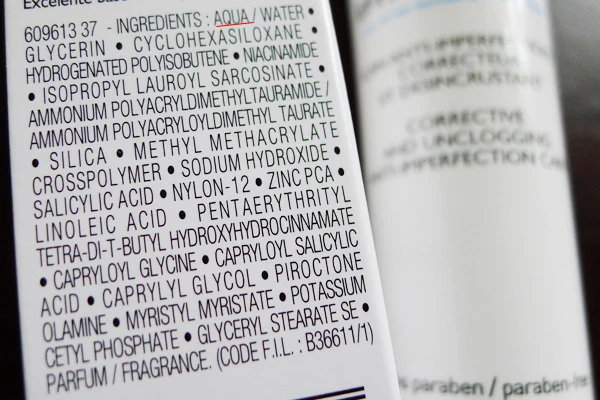
How to interpret an INCI label step by step.
1. Observe the first five ingredients.
These represent the majority of the formula. If you see Aqua, GlycerinEven with vegetable oils right from the start, the product has a good moisturizing base. If it appears... Alcohol Denat. Among the first signs, it may indicate a risk of dryness, especially in sensitive skin.
2. Identify the active ingredients
Substances such as Retinol, Niacinamide, Vitamin C or Hyaluronic Acid They usually appear further down the list. This is normal — they are effective even in small concentrations.
3. Pay attention to common irritants.
Perfumes (ScentArtificial colors and some preservatives can cause irritation. Products for sensitive skin should avoid these compounds or contain them only in minimal amounts.
The European list of perfume allergens requiring mandatory labeling currently includes 26 substances; with Regulation (EU) 2023/1545, this will increase to 82, with an adaptation period until July 31, 2026. As a dermatocosmetic specialist, I often recommend to my clients with sensitive or reactive skin that they start checking this section of the label more carefully now.
Quick guide: what to look for vs. what to watch out for
| Category | Search (good sign) | Watch out (extra caution) |
|---|---|---|
| Hydration | Aqua, Glycerin, Hyaluronic Acidvegetable oils | Alcohol Denat. in the top positions |
| Assets | Retinol, Niacinamide, Vitamin C, Peptides | — |
| Perfume and allergens | Formulas with few or no declared allergens. | Scent, Linalool, Limoneneespecially on sensitive skin |
| Conservation | Mild preservatives in low concentrations | Parabens in high concentrations, formaldehyde releasers. |
This table is not a substitute for professional evaluation; it serves as a first reading. If in doubt about a specific ingredient, consult the official database. CosIng The European Commission's list of approximately 15,000 substances indicates whether a substance is authorized, restricted, or prohibited in the European Union.
The importance of reading carefully
A product with "natural air" isn't always the safest. With knowledge of INCI standards, it's possible to:
- Detect greenwashing (deceptive marketing of "natural products")
- Avoid potentially allergenic ingredients
- Choosing truly effective formulas for each skin type.
Frequently asked questions about INCH
What does "INCI" mean on a cosmetic label?
INCI is an acronym for International Nomenclature of Cosmetic Ingredients, the system standardized by Regulation (EC) No 1223/2009 which requires all cosmetics sold in the European Union, including in Portugal, to list their ingredients with uniform scientific names.
Are the ingredients always listed in order of quantity?
Yes, as a general rule, in descending order of concentration. The exception is ingredients below 1%, and colorings, which can appear in any order from that point on the list.
When will it be mandatory to list perfume allergens on the label?
The European list of notifiable allergens will increase from 26 to 82 substances under Regulation (EU) 2023/1545, with an adaptation period until 31 July 2026.
How can I verify if a specific ingredient is safe?
The most reliable and free tool is CosIng, the official database of the European Commission, which indicates the status of each substance in the European Union.
Is a "natural" or "organic" product always safer?
Not necessarily. "Natural" is not a regulated term in the EU, and several natural ingredients (essential oils, certain extracts) are also allergenic. The reliable way to assess a product is still to read the full INCI list.
